
Mattress Buying Guide: How to Choose the Right Mattress
Published Last updated
Buying a mattress should be simple. You lie on it, decide whether it feels comfortable and place your order. In reality, phrases such as “medium-firm”, “2,000 pocket springs” and “pressure-relieving foam” can make two apparently similar mattresses feel completely different.
The right mattress is not necessarily the firmest, thickest or most expensive option. It is the one that supports your body comfortably, suits your usual sleeping position, works with your bed base and gives you enough room to sleep properly.
This guide explains the main mattress types, firmness levels, UK sizes and practical details to consider before ordering.
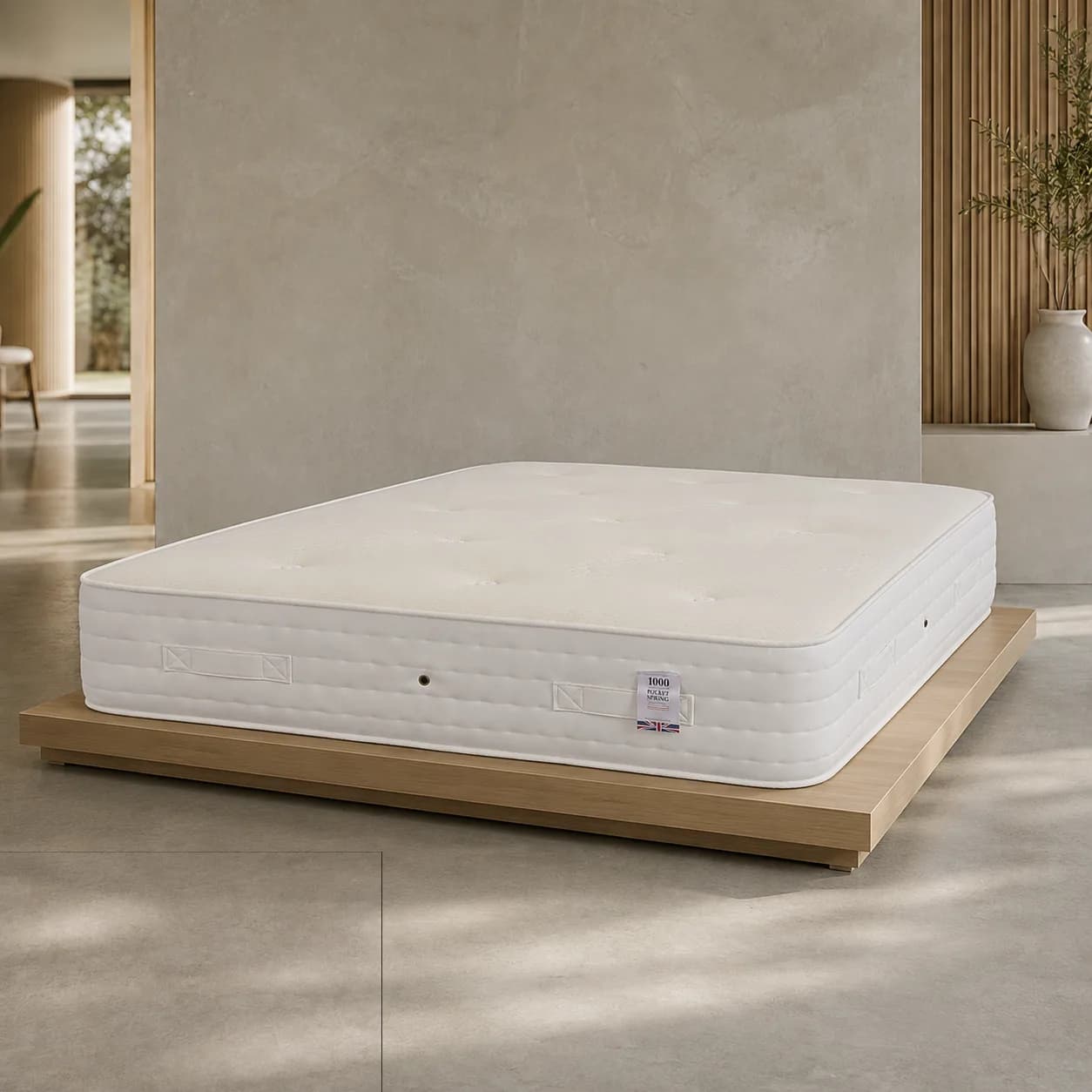
The quick answer: how to choose a mattress
Start with these six questions:
- What position do you normally sleep in?
- Do you prefer a softer, balanced or firmer feel?
- Do you sleep alone or share the bed?
- Do you regularly feel too warm during the night?
- What mattress size fits your bed frame and bedroom?
- Is the mattress compatible with your bed base?
Side sleepers commonly prefer more cushioning around the shoulders and hips. Back and front sleepers often need a more supportive surface that prevents excessive sinking. Couples may prioritise motion isolation and edge support, while warmer sleepers should look for breathable materials and good airflow.
Once you know the mattress type and firmness you prefer, confirm the dimensions. Use our UK bed size guide to compare standard measurements, or try the Bed Size & Room Planner to see which complete bed size works in your bedroom.
Mattress types explained
The construction of a mattress affects how it feels, how it responds to movement, how warm it sleeps and how easily it can be lifted or rotated.
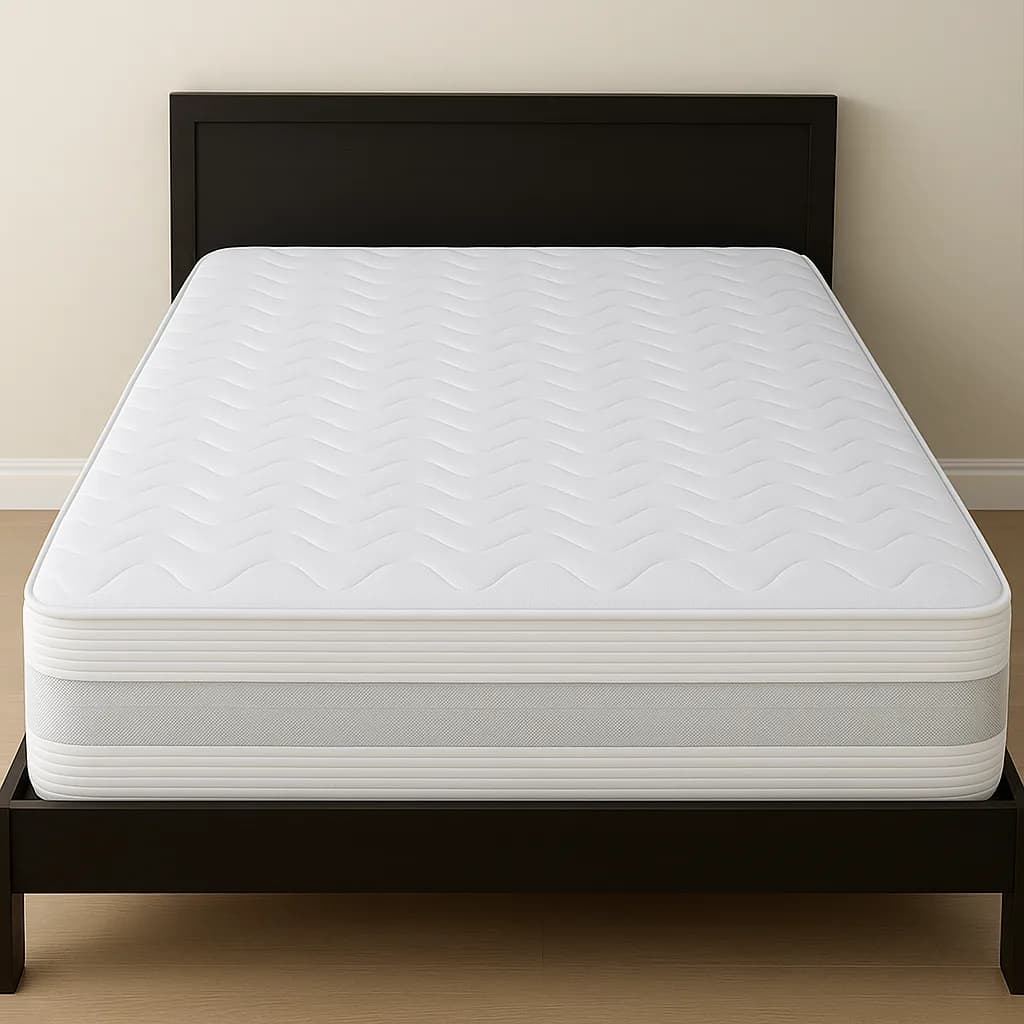
Pocket-sprung mattresses
A pocket-sprung mattress contains individual springs, each enclosed in its own fabric pocket. Because the springs move independently, the mattress can respond more closely to different parts of your body.
Pocket springs also reduce the “roll-together” feeling associated with some traditional spring mattresses. This makes them a popular option for couples, particularly when partners have different body weights or move during the night.
Pocket-sprung mattresses may suit you if:
- You want balanced support with some bounce
- You share the bed with a partner
- You prefer better airflow than dense foam usually provides
- You want a traditional mattress feel
- You need support across different parts of the body
The number of springs is worth considering, but it should not be treated as a quality score on its own. Spring design, wire tension, upholstery layers and overall construction are equally important. Browse our pocket-sprung mattress collection to compare models.
Memory foam mattresses
Memory foam softens in response to body heat and pressure, allowing it to follow the shape of your body. This creates a closer, more cushioned sensation than most traditional spring mattresses.
Its contouring can help distribute pressure around the shoulders and hips. It also absorbs movement effectively, which can be helpful if your partner changes position frequently.
Memory foam mattresses may suit you if:
- You enjoy a close, body-contouring feel
- You sleep on your side
- Pressure relief is a priority
- You share a bed with a restless sleeper
- You prefer minimal bounce
Some people find memory foam warmer than sprung alternatives. If you regularly overheat, look for breathable covers, ventilation channels or a hybrid construction that allows more airflow. See our memory-foam mattress collection for current options.
Hybrid mattresses
A hybrid mattress combines a sprung support core with foam or other comfort layers. The intention is to provide the responsive support and airflow of springs alongside the cushioning and motion absorption of foam.
Hybrid construction varies considerably. One model may contain a thin foam layer over standard springs, while another may use pocket springs, memory foam, cooling materials and natural fibres.
Hybrid mattresses may suit you if:
- You want cushioning without losing all the bounce
- You like the support of springs but want additional pressure relief
- You share the bed and want better motion isolation
- You want a balanced, modern mattress feel
- You are unsure whether to choose foam or springs
Always examine the complete construction rather than relying on the word “hybrid” alone. Compare models in our hybrid mattress collection.
Open-coil mattresses
Open-coil mattresses use interconnected springs rather than individually pocketed springs. They are generally lighter and more affordable, making them common choices for guest rooms, children’s rooms and occasional-use beds.
Because the springs are connected, movement can travel more noticeably across the mattress. They may also provide less individualised support than a good pocket-sprung model.
Open-coil mattresses may suit you if:
- You need a more economical mattress
- The bed will only be used occasionally
- You need a lighter mattress
- You prefer a traditional, bouncier feel
Latex mattresses
Latex has a responsive and gently cushioning feel. Unlike memory foam, it normally springs back quickly rather than holding the impression of your body.
Natural latex can be breathable and durable, but latex mattresses are frequently heavier and more expensive. Anyone with a known latex allergy should seek appropriate professional advice before purchasing.
Natural-fibre mattresses
Natural-fibre mattresses may contain wool, cotton, silk, cashmere, coir or other plant- and animal-based materials. These fillings can provide breathability and temperature regulation while creating a more traditional upholstered feel.
The term “natural” can describe anything from a single natural layer to most of the mattress. Check the complete material specification if natural content or sustainability is important to you.
Pocket sprung vs memory foam vs hybrid
Mattress type comparison
| Feature | Pocket sprung | Memory foam | Hybrid |
|---|---|---|---|
| Overall feel | Responsive and supportive | Close and contouring | Balanced and cushioned |
| Bounce | Moderate to high | Low | Low to moderate |
| Motion isolation | Good | Very good | Good to very good |
| Airflow | Usually good | Can retain more warmth | Usually better than all-foam |
| Pressure relief | Depends on comfort layers | Usually strong | Usually strong |
| Ease of movement | Generally easy | Can feel slower | Generally balanced |
| Typical weight | Medium to heavy | Medium to heavy | Often heavy |
| Best for | Traditional support and couples | Contouring and movement absorption | A mixture of support and cushioning |
These are general characteristics rather than guarantees. Two mattresses of the same type can still feel very different.
Shop mattresses
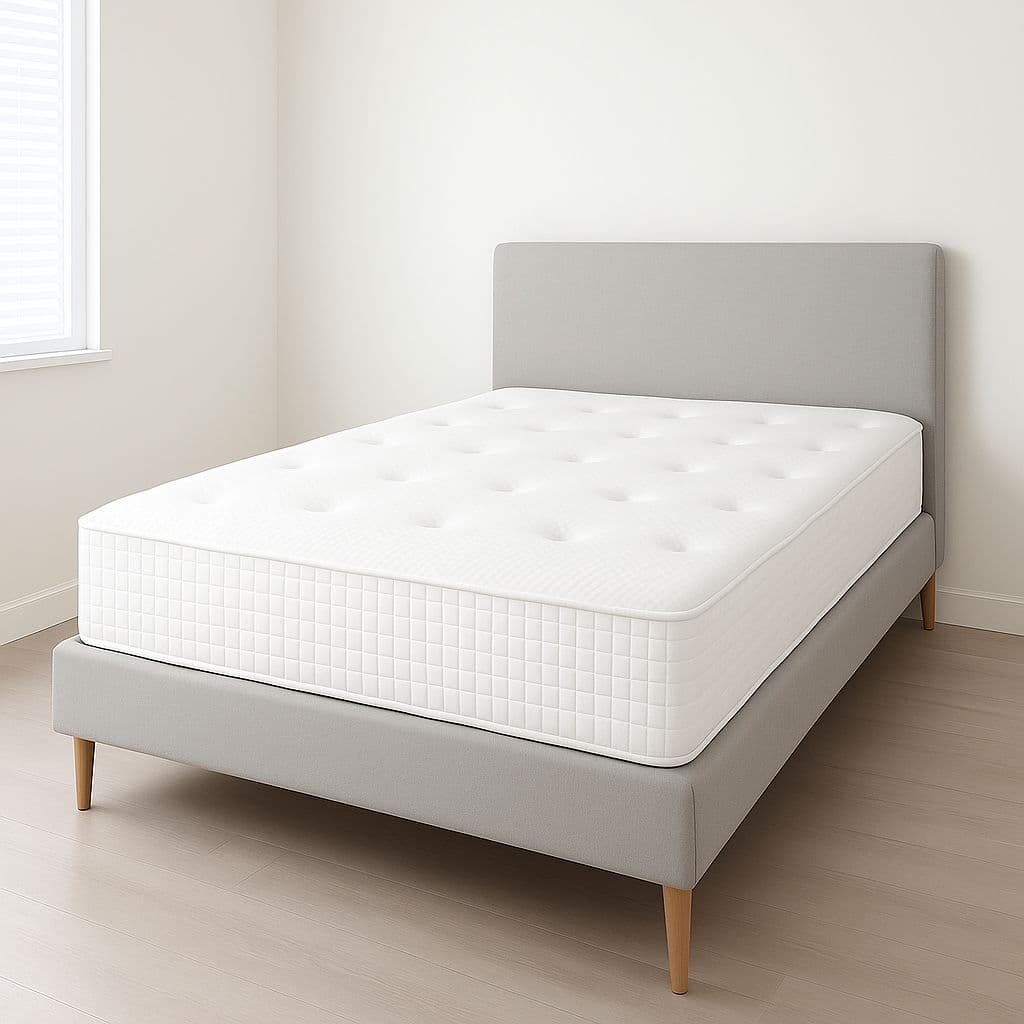
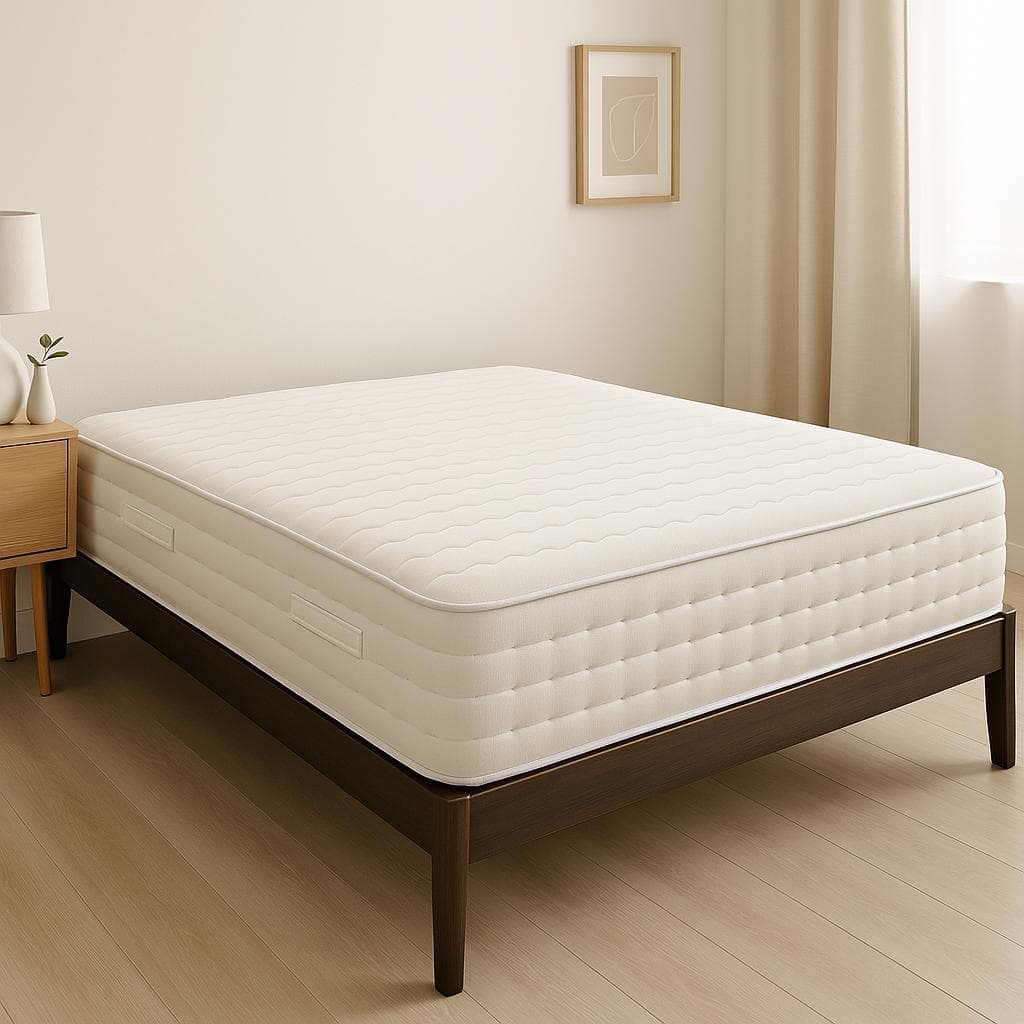
Compare construction, price and available sizes across the Bedwick mattress range.
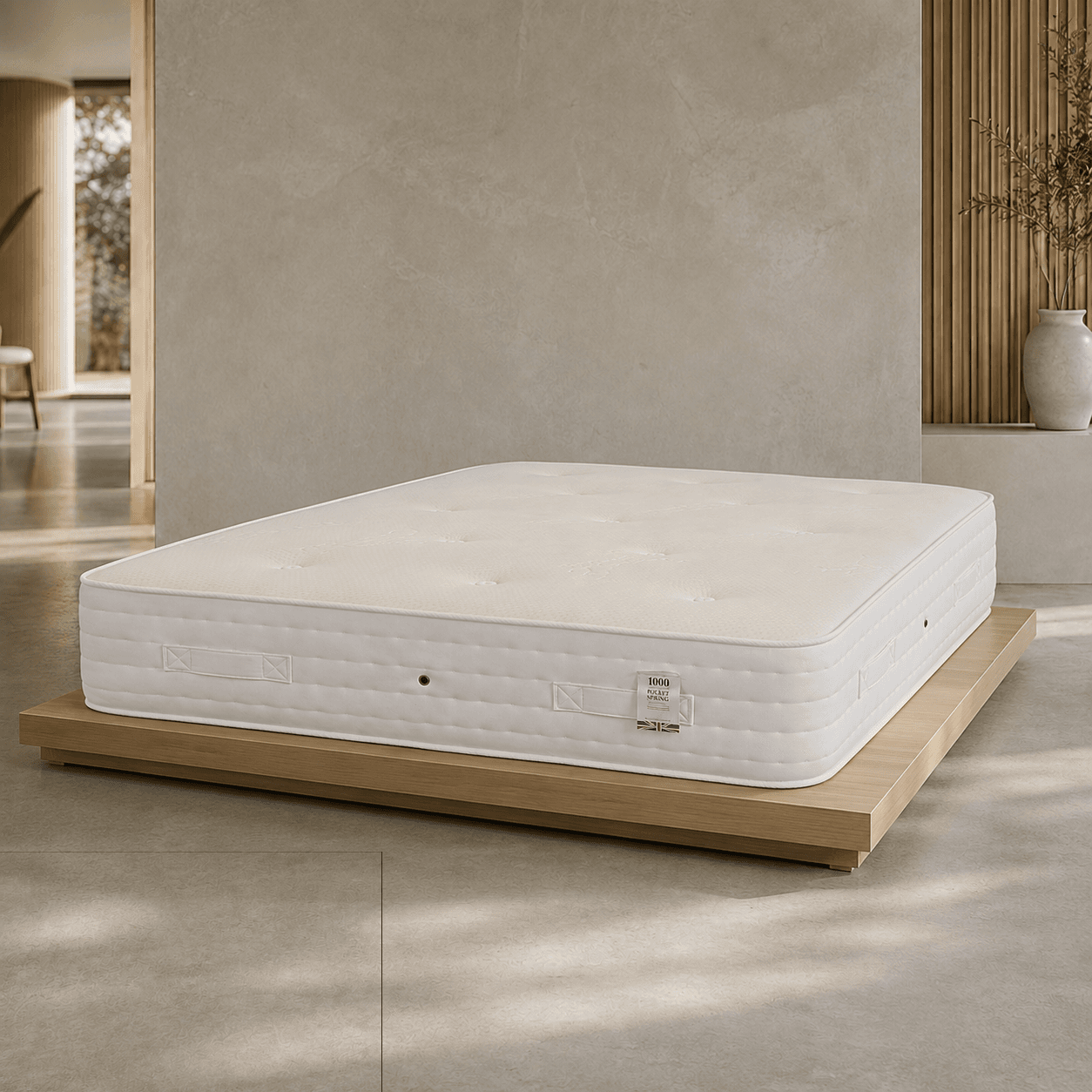
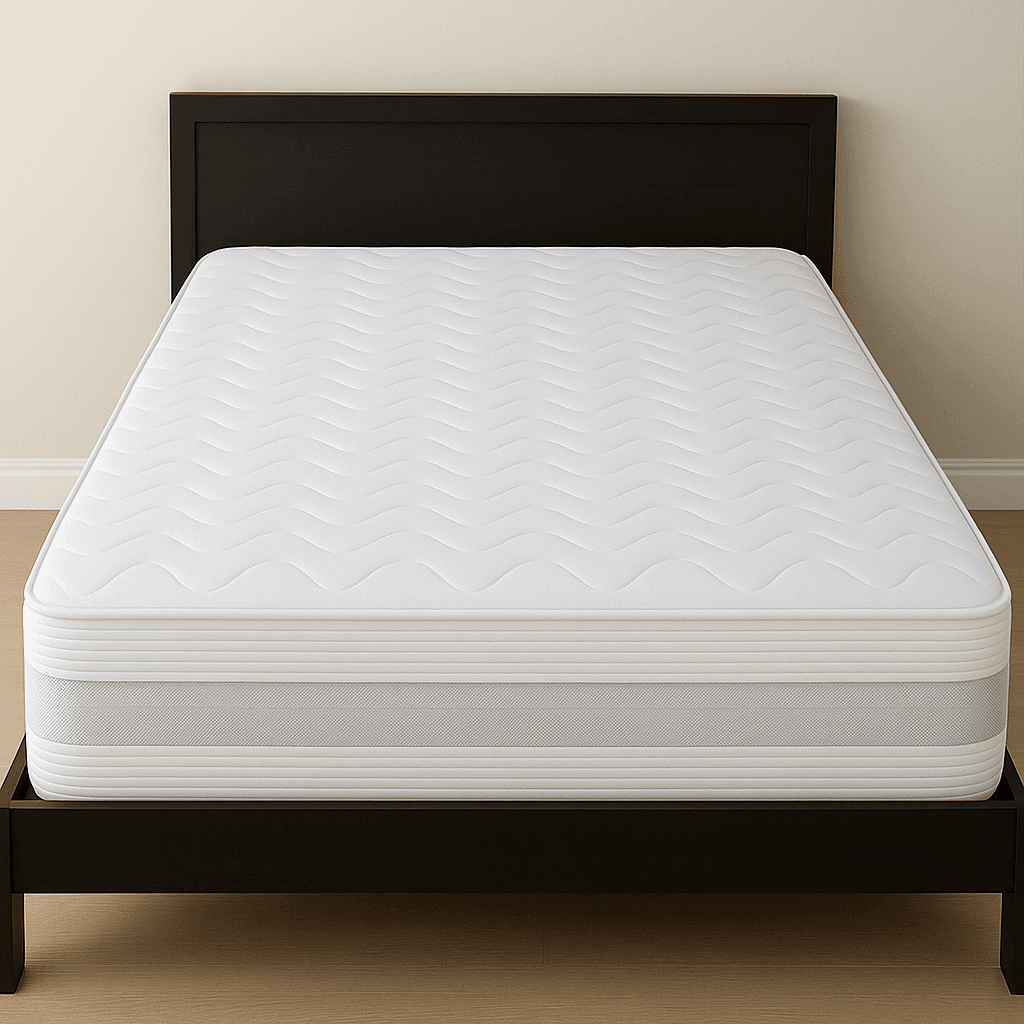
What mattress firmness should you choose?
Mattress firmness describes how soft or firm the sleeping surface feels. It is not the same as support.
A soft mattress can still be supportive if its underlying construction keeps your body properly positioned. Equally, a very firm mattress is not automatically better for posture or discomfort.
Firmness descriptions also vary between manufacturers. One company’s medium mattress may feel firmer than another company’s medium. Use the advertised grade as a starting point rather than an exact universal measurement.
Soft mattresses
A soft mattress allows the body to sink further into the comfort layers. It may suit lighter sleepers and people who sleep mainly on their side and want additional cushioning around the shoulders and hips.
A surface that is too soft for your body can allow the middle of the body to sink excessively.
Medium mattresses
Medium mattresses aim to balance cushioning and support. They are often selected by combination sleepers, couples with slightly different preferences and people who do not enjoy either an especially soft or especially firm feel.
Firm mattresses
Firm mattresses provide less surface sinkage. They may suit some back sleepers, front sleepers and people with a heavier build, depending on the mattress construction and individual preference.
A mattress that is excessively hard can create uncomfortable pressure around the shoulders, hips and other prominent areas.
Very firm mattresses
Very firm mattresses provide minimal cushioning and are generally chosen by people who specifically prefer a hard sleeping surface. Do not assume that “orthopaedic” or “very firm” automatically means medically suitable.
If persistent pain, an injury or a medical condition affects your sleep, obtain advice from a qualified healthcare professional rather than relying solely on a mattress firmness label.
The best mattress for your sleeping position
Most people change position during the night, but your usual starting and waking position provides a useful guide.
Side sleepers
When sleeping on your side, the shoulders and hips press more deeply into the mattress. A slightly softer or medium surface can provide room for these areas while supporting the waist.
Useful features include:
- Cushioned comfort layers
- Good pressure distribution
- Enough support to stop the hips sinking too far
- A responsive surface if you change sides frequently
Back sleepers
Back sleepers generally need consistent support across the shoulders, waist and hips. The mattress should follow the natural shape of the body without allowing the pelvis to drop significantly below the upper body.
Medium to firm mattresses are common choices, but body weight and personal preference remain important.
Front sleepers
Front sleepers normally need a surface that prevents the abdomen and hips from sinking too deeply. Excessive sinkage can make the body feel curved or unsupported.
A supportive medium-firm or firm mattress may work well. A very thick, soft comfort layer may feel less stable to a front sleeper.
Combination sleepers
Combination sleepers should look for a responsive mattress that makes turning comfortable. A balanced pocket-sprung or hybrid design may be easier to move across than deeply contouring foam.
How body weight affects mattress choice
The same mattress can feel softer to a heavier person and firmer to a lighter person. This is why firmness labels alone cannot predict comfort.
Lighter sleepers may not compress firm comfort layers enough to experience their intended cushioning. Heavier sleepers often benefit from a stronger support core, durable materials and sufficient mattress depth.
Couples with significantly different weights should consider:
- Independently moving pocket springs
- Strong edge support
- Responsive comfort layers
- A larger mattress
- Split-tension options, where available
The aim is not to select a mattress based on weight alone. It is to find a construction that supports both sleepers without creating excessive sinkage or unwanted pressure.
Choosing a mattress for couples
Sharing a bed introduces a few considerations that single sleepers may not notice.
Motion isolation
Motion isolation describes how well the mattress prevents movement from travelling from one side to the other. Memory foam, hybrids and independently pocketed springs generally control movement better than connected open-coil systems.
Edge support
Strong edges make more of the mattress surface usable. This matters when two people share a Double mattress or when one person regularly sleeps close to the edge.
Mattress size
A standard UK Double mattress gives each partner approximately 67.5cm of width. A King gives each person approximately 75cm, while a Super King provides approximately 90cm each—the same width as a standard Single mattress.
Moving to a larger bed can improve personal sleeping space, but remember that the complete frame will be larger than the mattress. Check it with the Bed Size & Room Planner before ordering.
Different comfort preferences
If one partner prefers soft and the other firm, look for a balanced medium feel or a mattress offering different tensions on each side. A generous home trial can be particularly valuable when two people must agree on the result.
What should hot sleepers look for?
If you frequently feel too warm at night, consider how easily air and moisture can move through the mattress.
Features worth investigating include:
- Pocket-sprung construction with open internal space
- Breathable covers
- Wool, cotton and other breathable fibres
- Ventilated foam
- Removable and washable covers
- Hybrid construction
- Moisture-wicking surface fabrics
Cooling claims should be treated realistically. A breathable mattress can help manage heat and moisture, but it cannot actively refrigerate the body.
Room temperature, bedding, nightwear and mattress protectors also affect how warm the bed feels.
Choosing the correct UK mattress size
The mattress must match the internal size of the bed frame. A Double mattress cannot be used correctly on a King frame, even if the difference initially appears small.
Standard UK mattress sizes
| UK mattress size | Dimensions | Feet and inches |
|---|---|---|
| Small Single | 75 × 190cm | 2ft 6in × 6ft 3in |
| Single | 90 × 190cm | 3ft × 6ft 3in |
| Small Double | 120 × 190cm | 4ft × 6ft 3in |
| Double | 135 × 190cm | 4ft 6in × 6ft 3in |
| King | 150 × 200cm | 5ft × 6ft 6in |
| Super King | 180 × 200cm | 6ft × 6ft 6in |
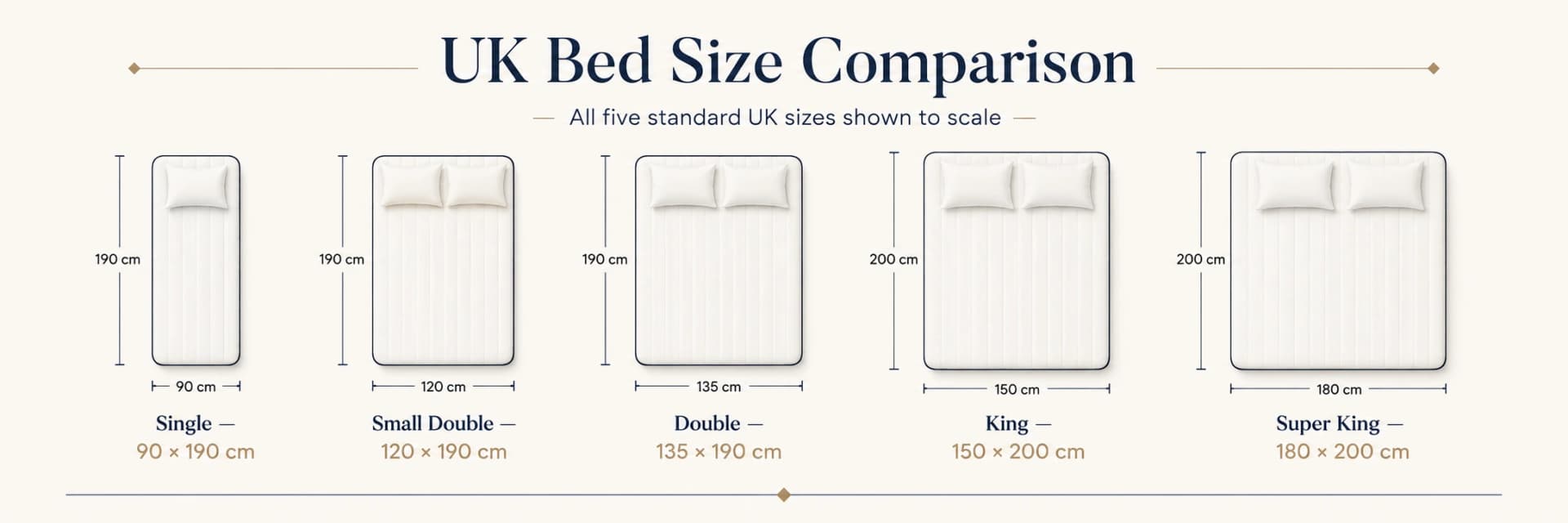
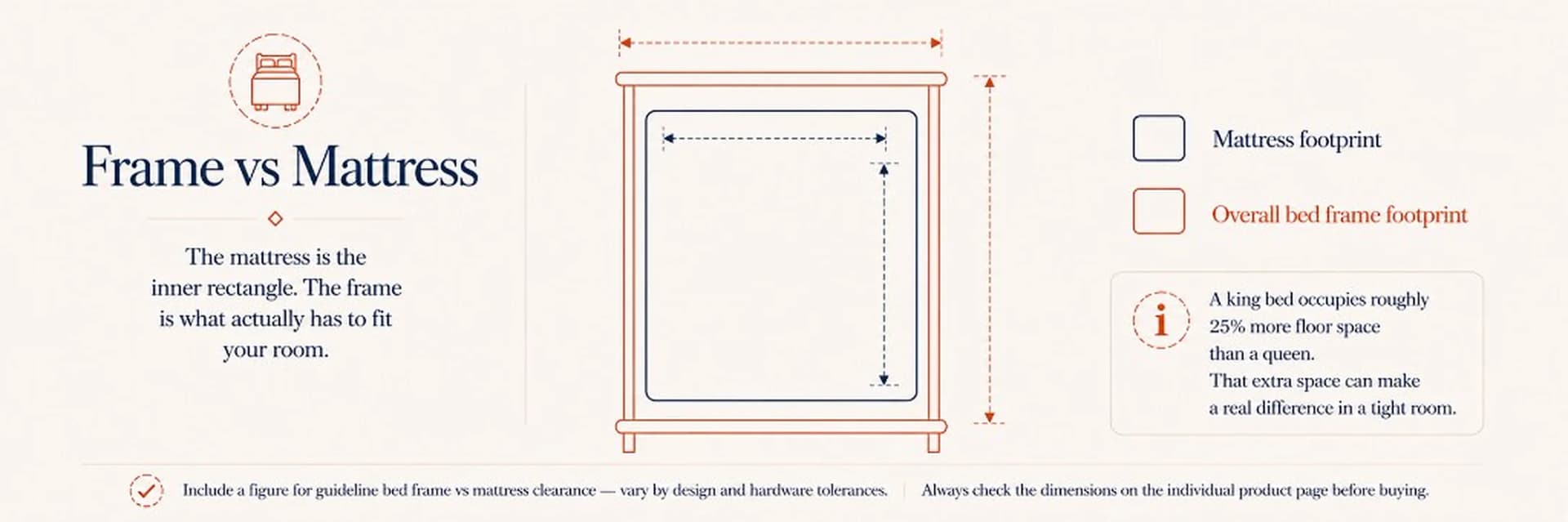
These measurements describe the mattress—not the complete bed.
Upholstered rails, wings, headboards and footboards increase the overall footprint. Read our complete UK bed size guide for frame comparisons and room-planning advice.
Will the mattress work with your bed base?
The base is part of the bed frame, not a separate afterthought. If you are still choosing the frame itself, our Bed Frame Buying Guide compares slats, platform bases, storage types and frame dimensions before you pair a mattress.
The base beneath a mattress affects how it feels and performs.
Slatted bed bases
Slats provide ventilation and a slightly more responsive foundation. Check the mattress manufacturer’s maximum recommended gap between slats, particularly for foam mattresses.
Solid platform bases
A solid platform creates a more uniform surface and can make a mattress feel slightly firmer. Ventilation should still be considered.
Ottoman bed bases
An ottoman base must support both the mattress and the lifting mechanism. Mattress weight is especially important: a mattress that is much heavier or lighter than intended can affect how easily the base lifts and closes.
If storage is important, use our Ottoman Bed Storage Calculator to estimate what different UK ottoman sizes can hold, then browse our Ottoman Beds.
Adjustable bases
Only use a mattress specifically confirmed as compatible with an adjustable base. Some traditional sprung mattresses are not flexible enough to bend repeatedly.
Mattress depth and bed-frame proportions
Mattress depth is easy to overlook, particularly when buying an upholstered bed.
A very deep mattress may:
- Cover more of the headboard design
- Make the overall bed unusually high
- Affect how easily you get in and out
- Require deeper fitted sheets
- Add weight to an ottoman lifting mechanism
A mattress that is too shallow may sit below the intended level of the side rails or leave an uncomfortable gap against the headboard.
Check the product specifications for both the mattress and bed frame rather than choosing by size name alone.
How much should you spend on a mattress?
There is no single correct budget. Price is affected by size, spring construction, filling quality, material quantity, manufacturing method, trial period and guarantee.
Instead of buying based on a discount percentage or spring count alone, compare:
- Complete internal construction
- Quality and depth of comfort layers
- Edge support
- Suitability for your sleeping position
- Base compatibility
- Trial and return terms
- Guarantee exclusions
- Expected care requirements
A mattress used every night deserves more consideration than one intended for an occasional guest room. The best value is a mattress that remains comfortable and supportive—not simply the cheapest model on the day.
Mattress trials, guarantees and returns
A short showroom test cannot reproduce a complete night’s sleep. When shopping online, check whether the mattress includes a home trial and understand its conditions.
Before purchasing, confirm:
- The length of the trial
- Whether a protector is required
- The minimum period before a return
- Collection or return charges
- Whether exchanges or refunds are offered
- What condition the mattress must be in
- What the guarantee covers
- Whether normal settlement is excluded
A guarantee normally covers specified manufacturing problems. It does not necessarily mean the mattress can be returned simply because the firmness is not right for you.
How to care for your mattress
Always follow the manufacturer’s instructions, because not every mattress should be flipped.
General care may include:
- Using a breathable mattress protector
- Rotating it according to the care instructions
- Flipping it only when it is double-sided
- Keeping the room ventilated
- Allowing a new mattress to air
- Using a compatible, supportive base
- Avoiding prolonged sitting on the same edge
- Checking slats and base components periodically
- Cleaning spills according to the manufacturer’s guidance
Proper support and regular care can help the mattress wear more evenly.
How often should you replace a mattress?
There is no universal replacement date. Mattress lifespan depends on its construction, the quality of its materials, how frequently it is used, the sleepers’ body weights and how it has been cared for.
Consider replacement when:
- The mattress has visible sagging or damage
- You regularly roll toward the middle
- The support feels uneven
- Springs or hard areas can be felt
- You consistently wake feeling uncomfortable
- The mattress has become significantly noisier
- Its hygiene or condition can no longer be maintained
Age can be a useful reminder to inspect a mattress, but condition and performance matter more than the calendar.
Mattress-buying checklist
Before ordering, confirm:
- The mattress size matches the bed frame
- The complete bed will fit the bedroom
- The mattress suits your usual sleeping position
- The firmness is appropriate for your preference and build
- The construction offers the support and airflow you want
- Couples have considered movement and edge support
- The mattress is compatible with the bed base
- Its depth looks right against the headboard
- Its weight is suitable for an ottoman mechanism
- You understand the trial, return and guarantee terms
- You have measured the delivery route
- Suitable fitted sheets and a protector are available
When you have chosen the size, use our Bed Size & Room Planner to test the complete arrangement before committing.
Frequently asked questions
There is no single best construction for everyone. Pocket-sprung mattresses offer responsive support and airflow, memory foam provides close contouring and motion isolation, and hybrids combine aspects of both. Your preferred feel, sleeping position and temperature are more useful decision factors than popularity alone.
Not necessarily. A mattress should keep you comfortably supported without excessive sinking or pressure. Very firm mattresses do not suit everyone. If back pain is persistent or severe, seek professional medical advice rather than relying on a particular firmness label.
Many side sleepers prefer soft-to-medium cushioning around the shoulders and hips, supported by a stable core. Body weight affects how soft or firm the same mattress will feel.
Back sleepers often prefer a medium-to-firm mattress that supports the waist and keeps the hips from sinking excessively. Personal comfort and body weight should also guide the decision.
Neither is universally better. Pocket springs generally offer more bounce and airflow. Memory foam generally provides closer contouring and stronger motion absorption. A hybrid may suit someone who wants characteristics of both.
No. Spring count is only one part of mattress construction. Spring quality, arrangement, wire tension, comfort layers, edge support and overall build all influence performance.
The appropriate depth depends on its construction, sleeper requirements and bed frame. Check that the mattress provides adequate support, sits correctly within the frame and does not hide too much of the headboard.
Not automatically. The size must match, and the mattress weight must be suitable for the gas-lift mechanism. Check the specifications of both products before ordering.
Only if the manufacturer describes it as double-sided. Many modern foam, hybrid and pillow-top mattresses are designed to be rotated but not flipped.
A trial allows you to evaluate comfort at home under stated conditions. A guarantee covers specific manufacturing defects or performance issues. Always read the terms because return charges, protectors and minimum trial periods may apply.
Find the right mattress and bed for your room
The right mattress should suit your body, but it must also suit the bed and bedroom around it.
Start by comparing our Mattresses, check the measurements in the UK Bed Size Guide, and then use the Bed Size & Room Planner to see how your chosen size works alongside doors, wardrobes and walking space.
Once the practical details are right, choosing the bed becomes much easier.