
Velvet vs Bouclé Beds: Which Fabric Is Right for You?
Published Last updated
Velvet and bouclé can give a similar upholstered bed two very different personalities. Velvet has a smoother surface with a pile that catches the light. Bouclé brings a more visibly textured finish, with loops that add depth to the fabric.
When comparing velvet vs bouclé beds, start with the look and feel you prefer, then check the care requirements of the actual fabric. Velvet suits readers who enjoy smooth upholstery and shifting colour depth. Bouclé suits those who want tactile texture, often within a softer, more relaxed bedroom scheme. Neither name alone tells you which fabric will last longer or clean more easily.
Before choosing from a photograph, compare free Bedwick fabric samples at home. A sample helps you judge the colour, surface and feel where the bed will actually sit.
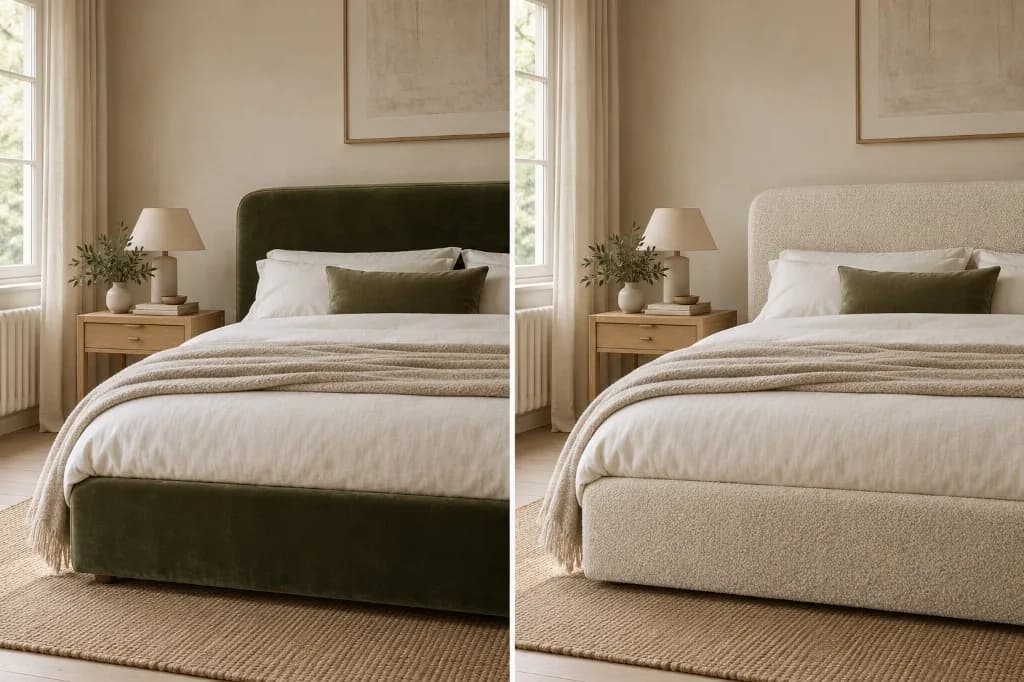
Velvet vs bouclé beds at a glance
| What matters to you? | Velvet upholstery | Bouclé upholstery |
|---|---|---|
| Surface | Short, cut pile with a smoother appearance | Looped yarns that create visible texture |
| Light | The pile can make colour appear lighter or darker from different angles | Surface texture creates small highlights and shadows |
| Styling | Works with both restrained schemes and richer statement colours | Adds interest to simple schemes, including warm neutrals |
| Everyday appearance | Pile direction and pressure can create shading | Loops can catch; appearance depends on loop size and construction |
| Pets | Check hair visibility and how the specific surface responds to contact | Consider snagging if pets scratch or knead upholstery |
| Care | Follow the supplier’s instructions for the particular velvet | Follow the supplier’s instructions and avoid pulling loops |
| Best next step | Compare a sample in daylight and lamplight | Inspect and feel the sample’s texture close up |
What is the difference between velvet and bouclé?
Velvet: a smooth pile with changing colour depth
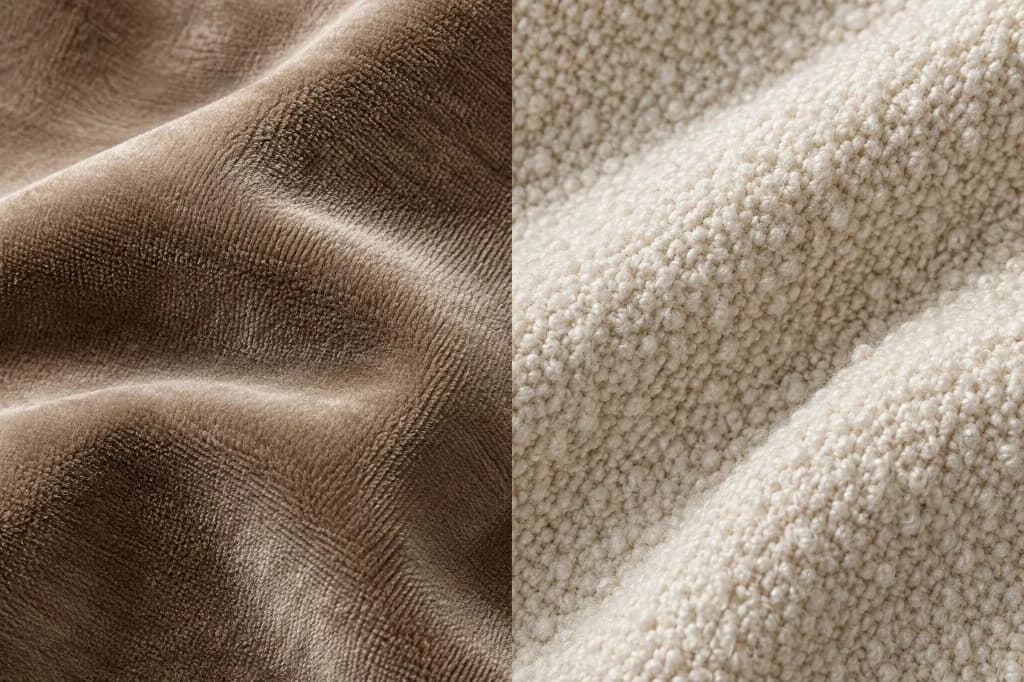
Velvet’s characteristic surface comes from closely packed, cut fibres called a pile. Run your hand gently across a sample and the surface may look different as those fibres change direction. That movement is part of its appeal: the same upholstery can appear richer from one side of the room and lighter from another.
A velvet bed can make a strong focal point, but it does not need a dramatic colour scheme. A quieter shade with simple bedding can feel understated. Headboard shape matters too: a plain upholstered panel and a deeply buttoned design will create different effects even in the same cloth.
Bouclé: texture that becomes part of the design
Bouclé uses looped yarns to produce an uneven, tactile surface. Some versions have small, closely packed loops; others have a larger, more pronounced texture. That difference can be difficult to judge in a thumbnail.
On a bouclé bed, the fabric contributes visual interest even when the colour is subdued. Pair it with smoother bedding if you want the headboard to stand out without filling the room with competing textures.
Fabric names do not establish fibre composition. Ask for the specification if composition matters to your choice, and judge the particular sample rather than assuming every velvet or bouclé feels alike.
Which fabric suits your bedroom style and lighting?
Choose velvet if you enjoy the way light moves across upholstery. It can add interest to a simple room through colour and surface alone. Keep nearby finishes quieter if you want the bed to carry the scheme: plain bedding, a timber bedside table and a simple lamp are enough.
Choose bouclé if you want texture to do more of the decorative work. Its surface can sit comfortably beside timber, smooth cotton bedding and a small number of accessories. A neutral bouclé bed does not require an entirely neutral room; it can also provide a quieter backdrop for coloured bedding.
Look beyond the fabric category when choosing colour. A pale bed against a pale wall may feel gentle and cohesive, while a stronger contrast makes the outline more noticeable. The height, wings and thickness of the headboard also affect how much space the bed seems to occupy.
For either finish, check a sample beside your wall in daylight and again under your normal evening lighting. Hold it upright, as it will appear on a headboard. A sample lying flat on a table receives light differently.
Which is more practical with pets or children?
The useful question is what the upholstery needs to cope with in your home.
For pets, consider claws and visible hair separately. Bouclé loops give claws something to catch, particularly if a cat kneads the headboard. A velvet surface does not have the same exposed loop structure, but it is not scratch-proof. Hair visibility depends on both the upholstery colour and your pet’s coat.
For children, investigate cleaning before choosing a shade. Ask what to do about a spill and which cleaning products, if any, are approved. A darker fabric is not automatically stain-resistant, and a textured surface is not automatically easy to clean.
For regular reading in bed, compare feel as well as appearance. Touch the sample against your forearm and consider whether you like its surface. The comfort of an upholstered headboard also depends on padding and shape; fabric alone does not determine it.
If durability is a priority, ask whether abrasion, pilling or snagging information is available for the specific cloth. Without comparable specifications, a blanket claim that one fabric is always tougher is not a reliable basis for choosing.
Velvet bed care and bouclé bed care
Start with the care instructions supplied for your chosen upholstery. A technique suitable for one fabric may mark another, even when both are sold under the same fabric name.
For routine care, remove loose dust gently using the method the supplier recommends. Where vacuuming is permitted, use an appropriate upholstery attachment and gentle suction. Avoid catching trims, seams or exposed loops.
For spills, lift excess liquid promptly with a clean, dry white cloth, blotting rather than scrubbing. Check the approved cleaning method before adding water, detergent or a stain remover. Test an approved treatment in an inconspicuous area first.
Velvet shading can come from the direction of the pile rather than a stain. Ask for advice before trying to correct it. Do not assume steaming is suitable. With bouclé, avoid pulling a loose loop or attempting a repair without guidance.
Persistent stains, damaged loops or an unclear care label are reasons to contact the supplier or a suitable upholstery-cleaning specialist. A short conversation is better than experimenting on a visible headboard panel.
Can you choose velvet or bouclé with ottoman storage?
Upholstery and storage are separate decisions. Choose the surface you like, then check which base and fabric combinations are offered on the particular bed.
If you need space for spare bedding, browse Bedwick ottoman beds and confirm the available configuration on the product page. Measure the complete frame and allow room to use the lift safely. Our Bed Size & Room Planner helps you explore the layout before ordering.
If a smaller separate store suits your room, explore upholstered blanket boxes. Check fabric availability and dimensions, and leave space to open the lid as well as walk around the bed.
How to choose your upholstered bed fabric using samples
A few minutes with samples can resolve questions that a styled photograph cannot.
- Shortlist the surface first. Compare velvet and bouclé in person before narrowing everything down by colour.
- Hold the samples upright. Place them where the headboard will sit and view them from the doorway as well as close up.
- Check two lighting conditions. Look in daylight and with the bedside lamps you normally use.
- Bring your bedding into the comparison. Put the sample beside your duvet cover, curtains or a cushion you plan to keep.
- Ask the practical questions. Confirm composition, cleaning instructions and availability on your chosen bed.
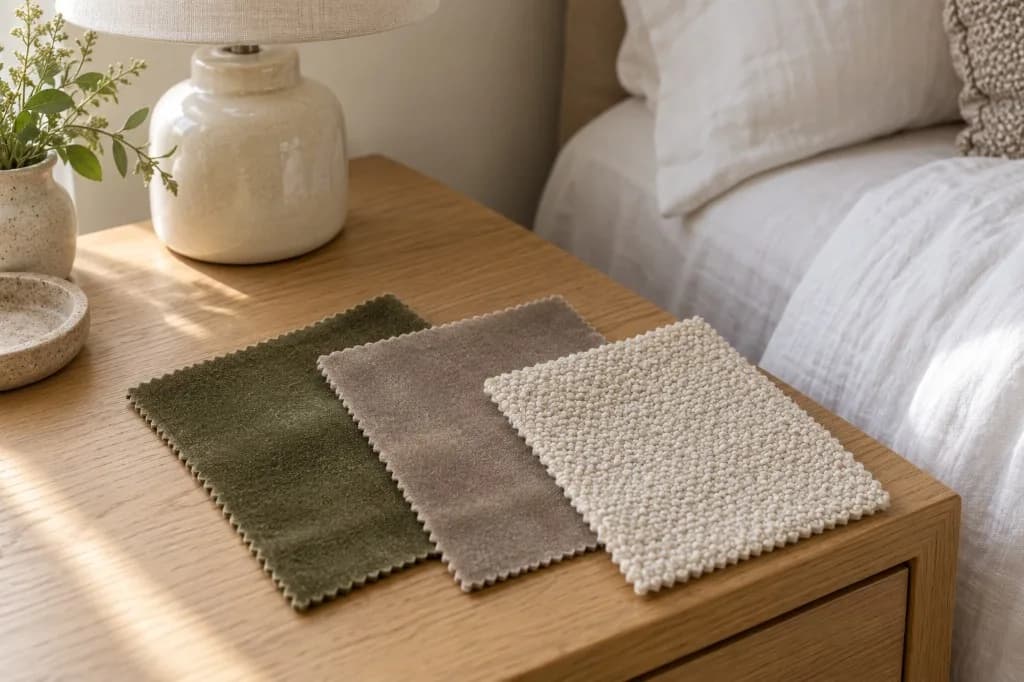
Bedwick’s sample selector includes Plush Velvet and Teddy Bouclé. Order free fabric samples to compare your shortlist in your own room, then confirm the finish on the bed’s product page.
Frequently asked questions
Choose velvet if you prefer a smoother surface and the way its pile changes with the light. Choose bouclé if you prefer visible, looped texture. Check the actual fabric’s feel and care requirements before deciding; neither finish is universally better.
That depends on the specific fabric, colour and type of mark. The textured surface needs gentle handling, and loops should not be scrubbed or pulled. Follow the supplied care instructions rather than assuming all bouclé tolerates the same cleaning method.
They can show changes in shading where the pile lies in a different direction or has been pressed. That is different from a spill or stain. Check the supplier’s advice before brushing, steaming or applying a cleaning product.
Consider whether your cat scratches or kneads upholstery. Exposed bouclé loops can catch on claws, while velvet has a cut-pile surface. Neither is claw-proof. Compare the particular fabric and consider keeping pets away from upholstered panels.
The feel of a headboard fabric does not reliably predict sleeping temperature. Your mattress, bedding, room temperature and ventilation are more directly relevant. Choose upholstery for its appearance, touch and care requirements.
Yes. Bedwick’s free fabric samples page includes Plush Velvet and Teddy Bouclé options. Compare your shortlist at home and check the selected finish is available on the bed you want.
Find the finish you will enjoy living with
Picture the bed on an ordinary evening: the lamps are on, your usual bedding is in place and you are leaning against the headboard with a book. Choose the surface you want to see and touch in that setting, with a care routine you understand.
Compare free Bedwick fabric samples before deciding. For the remaining choices about frame shape, base and room measurements, use our bed frame buying guide.
Related guides
 FeaturedBuying Guides
Bed Frame Buying Guide
A practical guide to choosing a bed frame in the UK — room measurements, mattress sizes, storage types, base compatibility, delivery access and what to check before you order.
Read article Inspiration
15 Bedroom Interior Design Tips for a Room You’ll Love
Discover 15 practical bedroom interior design tips covering layout, bed size, colour, lighting, storage and styling—with free Bedwick planning tools.
Read article