
Storage Bed Buying Guide: Ottoman, Drawer and Divan Beds Explained
Published Last updated
A storage bed combines a comfortable sleeping surface with built-in compartments for bedding, clothing and other belongings you would rather not stack on show. Choosing the right type — ottoman, drawer, divan or a specialist design — depends as much on your daily routine as on the size of your bedroom.
This storage bed buying guide compares the main types of storage beds, explains how to match storage to what you own, and covers room measurements, capacity estimates and practical safety. For detailed guidance on gas-lift operation, mattress weight and ottoman organisation, see our dedicated Ottoman Bed Guide.
Specifications vary between models, so treat general guidance as a starting point and confirm dimensions, storage configurations and opening options on each product page.

What is a storage bed?
A storage bed — sometimes called a bed frame with storage or a bed with storage — is any bed that incorporates compartments for belongings within the frame rather than relying on separate furniture. The most common types are ottoman storage beds, which lift the mattress platform to reveal a void underneath, and drawer storage beds, where sliding compartments sit around the base perimeter.
Divan beds with storage usually combine an upholstered base with either drawers or an ottoman lift. Upholstered storage beds may offer storage as a configurable option when you order. Some specialist designs add storage within the headboard, at the foot end or alongside a television lift mechanism.
The best storage bed for your home is the one whose opening direction, access method and capacity match how you live — not simply the model with the largest advertised compartment.
Start with what you need to store
Before comparing ottoman, drawer or divan options, list what you actually want the bed to hold. A storage bed that suits spare bedding and seasonal coats may frustrate you if you mainly need daily access to pyjamas and books.
Think about volume, shape and how often each item is needed. Bulky textiles and luggage often suit a lift-up ottoman. Smaller everyday items usually work better in drawers you can pull open without lifting the mattress.
Matching belongings to storage types
| What you need to store | Practical storage option |
|---|---|
| Spare duvets, pillows and seasonal bedding | Ottoman or deep divan drawers |
| Everyday pyjamas, books and chargers | Side drawers or bedside storage |
| Off-season clothing in breathable bags | Ottoman or continental drawers |
| Luggage and weekend bags | Ottoman (if internal height allows) |
| Children's toys and clothes | Drawer divan or shallow drawers |
| Electronics and heat-sensitive items | Not recommended in enclosed bed storage |
If your list is mostly occasional items, lean toward an ottoman storage bed. If you reach into storage every evening, a drawer divan or bedside storage may feel more practical day to day.
How often will you use the storage?
Frequency of access is one of the most overlooked factors when choosing between storage beds. An ottoman can hold more in one compartment, but lifting the mattress platform takes more effort than sliding open a drawer — so it suits items you need weekly or monthly rather than several times a day.
Drawer storage beds make sense when you want compartmentalised access without disturbing the mattress. Continental drawers on a divan base can extend from the foot or sides depending on the configuration. Foot-end drawers may work when side clearance is limited, provided the foot of the bed has enough space for the drawer to extend.
Be honest about your routine. A lift-up storage bed chosen purely for maximum capacity can become annoying if you open it every night for items that would have lived more happily in a single drawer.
What types of storage beds are available?
The main types of storage beds found in UK bedrooms include ottoman lift-up bases, drawer divans, upholstered frames with optional storage, headboard storage, children's storage beds, guest beds with under-bed space and TV beds that may also offer ottoman storage. Each type solves a slightly different problem.
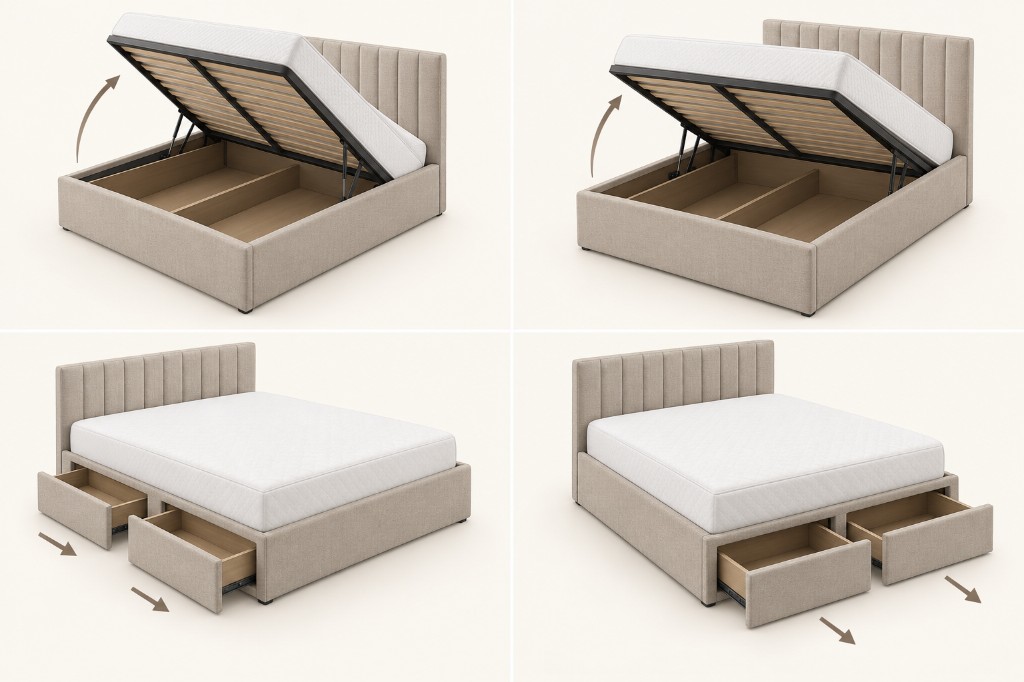
- Ottoman storage beds — one large compartment under the mattress, accessed by lifting the platform
- Drawer storage beds — separate sliding compartments at the side or foot of the base
- Divan beds with storage — upholstered bases with drawer or ottoman options
- Headboard storage beds — shelves or compartments built into the headboard structure
- TV beds with storage — television lift combined with optional under-bed storage on selected models
Ottoman storage beds
An ottoman storage bed — also called a lift-up storage bed — hides a large compartment beneath the mattress. Instead of drawers at the side, the entire mattress platform rises on gas struts or, on some models, a motorised lift so you can reach hidden storage from above.
Ottoman beds are often chosen for spare bedding, seasonal clothing and luggage because they can use much of the mattress footprint as storage volume. They can work well as a storage bed for a small bedroom where floor space for extra furniture is limited, although you still need clearance for the platform to lift safely.
Gas-lift mechanics, mattress weight limits, internal organisation and detailed safety guidance are covered in our Ottoman Bed Guide. Browse Bedwick ottoman beds, side lift ottoman beds, gas lift ottoman beds or ottoman TV beds to compare styles and check which storage configurations each model offers.
Side-lift or end-lift ottoman storage?
Ottoman beds open from either the foot end (end-lift) or one long side (side-lift). The right direction depends on where walls, wardrobes and furniture sit relative to the bed — not on which label sounds more premium.
| Opening type | Typical access | Clearance needed |
|---|---|---|
| End-lift ottoman | Foot end lifts upward | Clear space at the foot of the bed |
| Side-lift ottoman | One long side lifts upward | Clear space on the opening side |
| Left/right configurable | Side opening chosen at order stage | Clearance on the chosen side only |
A side-lift ottoman bed suits rooms where the foot is tight against a wall but one long side has clearance. An end-lift ottoman bed can work when both sides are partly obstructed but the foot remains open. Some Bedwick models let you choose the opening direction at order stage — confirm availability on the product page.
Drawer storage beds
A drawer storage bed — or bed with drawers — keeps the mattress fixed while separate compartments slide out from the base. That makes everyday items easier to reach than lifting an ottoman platform, but each drawer holds less than one large void and needs its own clearance path on the floor.
Drawer beds are common on divan bases, where two, four or more drawers wrap around the perimeter. On larger sizes you may see continental drawers that extend from the foot end as well as the sides — useful when one side sits against a wall.
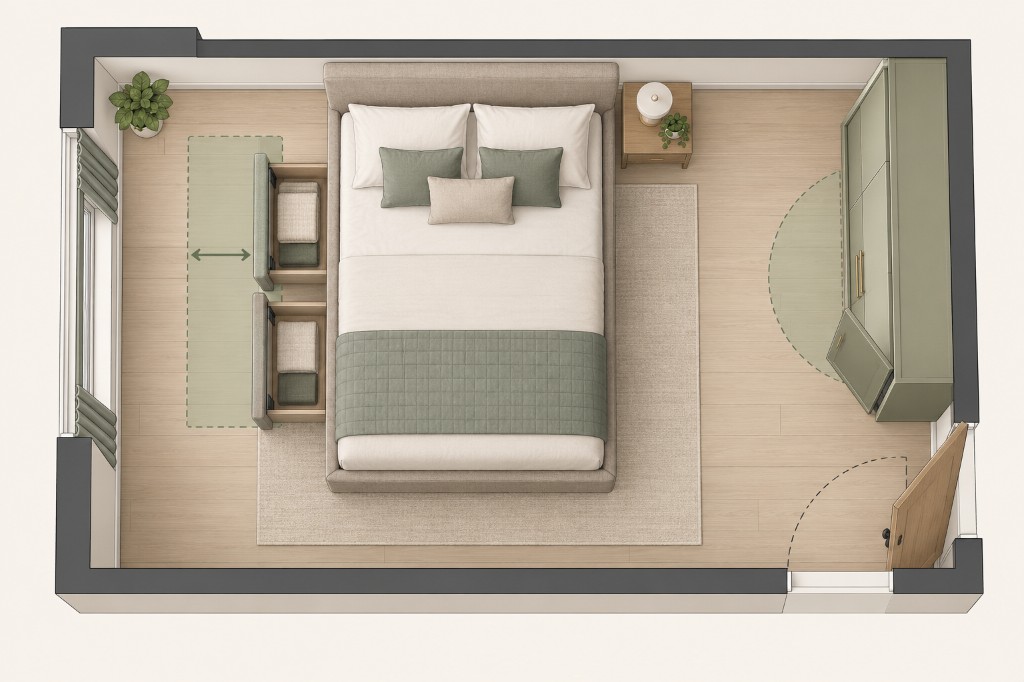
Plan drawer clearance before you order. Each drawer needs enough free floor space to extend fully on its runners, plus room to stand and reach inside. Wardrobe doors, the bedroom door and bedside tables all affect whether a drawer configuration will work in your layout.
Understanding drawer configurations
Drawer layouts vary by bed size and manufacturer. Common configurations include:
- Two-drawer divan — often one drawer on each side on smaller sizes; suited to limited floor space
- Four-drawer divan — two drawers on each long side; popular on double and king sizes
- Continental drawers — additional drawers at the foot end alongside side drawers; can help when one side is against a wall
- Foot-end drawers — compartments that slide out from the end of the bed rather than the side; useful in narrow layouts
Not every configuration is available on every size. A four-drawer divan on a king bed will not necessarily offer the same layout on a single. Check the product specification rather than assuming a generic layout.
Divan beds with storage
A divan bed with storage combines an upholstered base — usually with a matching headboard — and either drawer compartments or an ottoman lift. Divan beds with drawers prioritise frequent, sorted access; divan ottoman models prioritise maximum hidden volume under the mattress.
On Bedwick, many upholstered beds can be configured with ottoman storage when you order rather than arriving as a fixed drawer divan. Browse divan beds to compare styles, and open each product page to see whether drawer or lift-up storage is available on that model.
Upholstered bed frames with storage
An upholstered storage bed wraps fabric or leather-style upholstery around a timber frame. Storage is not always built in — on many Bedwick designer and luxury models you select a storage base option during configuration, which may add a gas-lift ottoman mechanism or a solid platform without storage.
The visible frame size is larger than the mattress footprint because of the headboard and side rails. When planning a storage bed for a small bedroom, measure the complete frame dimensions listed on the product page, not just the mattress size. Our UK Bed Size Guide explains how frame dimensions relate to standard UK mattress sizes.
Headboard storage beds
A headboard storage bed integrates shelves, niches or small compartments into the headboard structure. This can keep books, glasses or a phone within reach without oversized bedside tables, but headboard storage holds far less than an ottoman void or full drawer set.
Headboard storage works best as a supplement to under-bed storage, not a replacement for it. Check the depth and weight limit of any shelf or niche on the product page — not every headboard is designed for heavy loads.
Children's storage beds
A children's storage bed helps keep toys, clothes and bedding organised in a smaller room. Drawer divans are popular because children can reach individual compartments without lifting a heavy platform. Some families choose ottoman storage in a child's room for seasonal items accessed less often.
Supervise young children around open ottoman platforms and moving drawers. Do not let children play on or under an open lift mechanism. Browse kids beds and check each listing for available storage configurations.
Guest and trundle beds
A guest bed with storage may combine a standard sleeping surface with under-bed drawers, an ottoman void or a pull-out trundle for an extra mattress. Trundle designs prioritise an occasional second bed over maximum storage volume — the trundle unit occupies space that might otherwise hold boxes or bedding.
If the room doubles as a home office or dressing room, think about how often the second bed is used versus how much concealed storage you need year round. An ottoman in a guest room can hold spare bedding between visits without a separate blanket box on show.
TV beds with storage
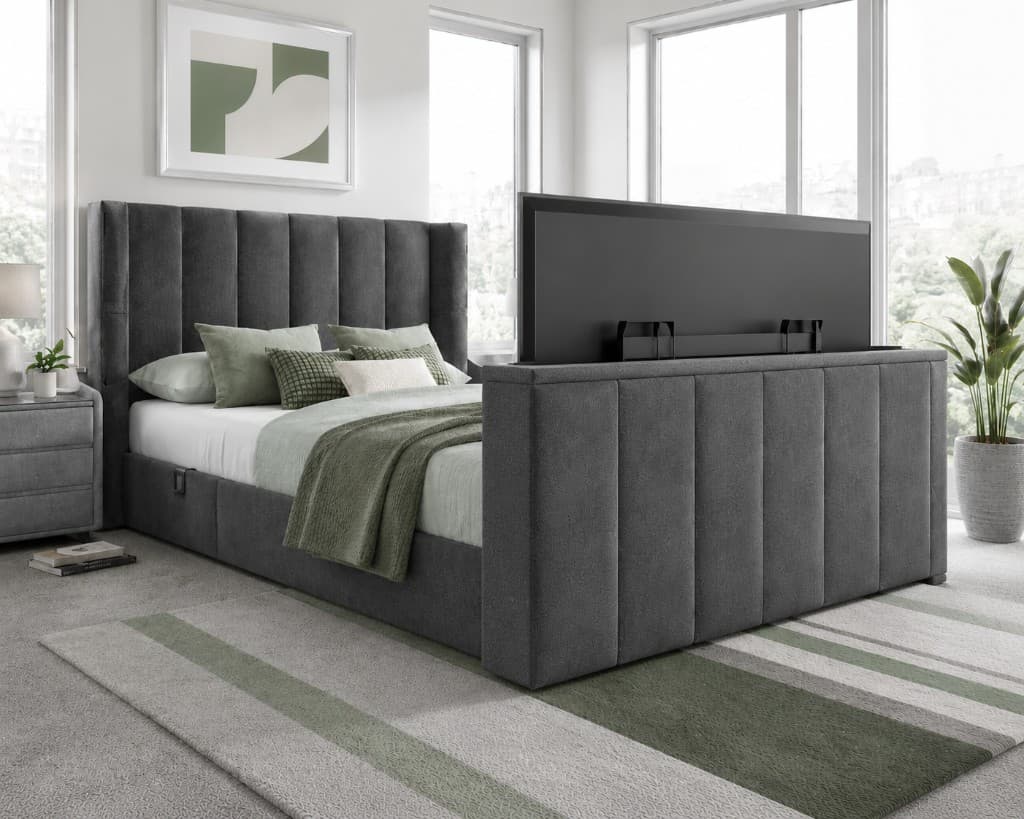
A TV bed with storage combines a concealed television lift with optional under-bed storage on selected models. The television mechanism and gas-lift storage share the same base, so internal layout, depth and available configurations vary more than on a standard ottoman bed.
Not every TV bed includes ottoman storage — some focus on the screen lift alone. Our TV Bed Guide covers screen compatibility, room measurements and cabling. Browse TV beds and check the storage options on each product page before assuming under-bed space is included.
Ottoman bed vs drawer bed
The ottoman bed vs drawer bed question comes down to capacity versus convenience. Ottomans usually win on total hidden volume; drawer beds win on everyday access and visible organisation.
| Comparison | Ottoman storage bed | Drawer storage bed |
|---|---|---|
| Storage layout | One large compartment under the mattress | Separate drawers around the base perimeter |
| Best use | Bulky seasonal items, spare bedding and luggage | Everyday items you reach for regularly |
| Access method | Lift the mattress platform with gas struts or a motor | Pull individual drawers from the side or foot |
| Clearance | Needs room for the platform to rise and stay open | Needs floor space for drawers to extend — often on both sides |
| Organisation | Suits labelled boxes and stacked loads; less visible at a glance | Easier to sort into dedicated drawers |
| Mattress considerations | Mattress weight and depth can affect lifting effort — check product guidance | No lifting mechanism; mattress stays fixed on the base |
Some households choose an ottoman in the main bedroom for bulk storage and a drawer divan in a child's room where toys and clothes change daily. Neither option is automatically the best storage bed — it depends on what you store and how your room is shaped.
How to measure your room for a storage bed
Storage-bed dimensions include the full frame, not just the mattress. Before choosing drawers or a lift-up base, measure the complete bed against the room and map what happens when storage opens.
- Measure wall-to-wall and note chimney breasts, alcoves and radiators
- Add the full frame width and length from the product page
- Mark wardrobe door swings — they need clearance independent of bed drawers
- Check the bedroom door arc so it does not collide with an extended drawer or a raised ottoman platform
- Leave a practical walkway on at least one side for making the bed
As a planning guide, around 60cm at an accessible side feels comfortable for many adults; around 45cm is tighter and may require turning sideways. At the foot, approximately 70cm or more generally makes movement easier. These are practical recommendations, not regulations.
Compare your chosen UK mattress size against our UK Bed Size Guide if you are unsure which size fits the room once the frame and headboard are included.
How much storage does a storage bed provide?
Storage-bed capacity varies with bed size, internal depth and construction. Gas-lift arms, hinges, runners and internal framing all reduce usable space compared with the outer frame dimensions. Treat any single headline figure as a planning estimate unless the manufacturer publishes verified internal measurements for that model.
Estimated volume
internal length × internal width × usable depth
Geometric volume is a starting point only. Usable capacity is always less because of internal structure and how items are packed.This is an approximate planning estimate based on the dimensions selected. Actual usable storage varies by bed design, internal structure and how items are packed.
UK mattress sizes and footprint
| UK mattress size | Dimensions | Feet and inches |
|---|---|---|
| Small Single | 75 × 190cm | 2ft 6in × 6ft 3in |
| Single | 90 × 190cm | 3ft × 6ft 3in |
| Small Double | 120 × 190cm | 4ft × 6ft 3in |
| Double | 135 × 190cm | 4ft 6in × 6ft 3in |
| King | 150 × 200cm | 5ft × 6ft 6in |
| Super King | 180 × 200cm | 6ft × 6ft 6in |
Storage-floor construction
The floor of a storage compartment — and the platform above it — affects what you can store and how the mattress feels. Construction varies by model; do not assume every storage bed shares the same internal build.
| Construction type | What it is |
|---|---|
| Fabric-lined void | Storage area lined with upholstery fabric inside the base |
| Boarded floor | Solid panel forming the base of the storage compartment |
| Slatted platform (sleeping surface) | Sprung or fixed slats above the storage void |
| Drawer boxes | Separate timber or board-sided boxes on runners |
Does a storage bed need a special mattress?
You do not usually need a dedicated mattress for storage bed, but compatibility still matters. The mattress must match the UK size of the bed frame and suit the base type — sprung slats or a solid platform.
On ottoman storage beds, mattress weight and depth can affect how the lift feels in use. A heavier mattress may require more effort to raise. Read our Mattress Buying Guide for firmness and base compatibility, then browse Bedwick mattresses to find a suitable match for your chosen bed.
What can you store in a storage bed?
Storage beds suit items you need occasionally rather than every hour. Common choices include:
- Spare duvets, pillows and seasonal bedding
- Extra blankets and mattress protectors
- Off-season clothing in breathable bags
- Soft-sided luggage and weekend bags
- Guest-room extras when wardrobe space is full
Reserve drawer compartments for smaller items you reach for more often, and the ottoman void for bulkier loads accessed less frequently.
What should you avoid storing?
- Damp or partially dry textiles
- Uncovered food, liquids or anything that could leak
- Heat-sensitive or strongly scented items in a closed void
- Flammable products or unprotected sharp objects
- Very heavy loads unless the manufacturer confirms they are suitable
- Hot electronics in unventilated compartments
If an item must stay absolutely flat, accessible within seconds or carefully climate-controlled, it may belong elsewhere — even if it physically fits inside the base.
How to organise storage-bed space
Whether you choose an ottoman or drawers, organisation determines whether the storage stays useful. A few simple habits help:
- Divide the space into zones — frequent items near the opening edge, seasonal items toward the back
- Use low, flexible bags or shallow lidded boxes rather than tall rigid crates that catch on the frame
- Label bags you cannot see into without unpacking everything
- On drawer divans, assign one category per drawer so everyday items do not get buried
For detailed ottoman organisation tips — including platform lifting habits — see the ottoman organisation section in our specialist guide.
How to prevent damp and odours
Any enclosed storage can trap moisture if items are put away damp or the room lacks ventilation. Store only dry textiles, leave compartments open briefly after accessing them when practical, and avoid overfilling the space so air can circulate.
A storage bed does not replace good bedroom ventilation. If a room is prone to condensation, address airflow and humidity separately rather than expecting the base to prevent damp on its own.
Safety and maintenance
Storage beds are safe when assembled correctly and used as intended. Basic habits include:
- Keeping fingers and cables clear while lowering an ottoman platform
- Not letting children play on or under an open lift mechanism
- Following assembly instructions and tightening fixings as directed
- Not exceeding any stated weight limits for your specific model
- Checking struts, hinges and drawer runners periodically for wear
If a platform drops unexpectedly, a drawer sticks or a mechanism feels uneven, stop using that storage function until it has been inspected. Delivery and warranty information is summarised on our delivery page; contact us through customer support if you need help with a Bedwick order.
Are storage beds worth it?
Storage beds can be worth the investment when bedroom storage is limited and a single piece of furniture replaces a separate chest or blanket box. They work best when the storage type matches your routine — not when you choose the largest compartment without thinking about access.
Consider total cost against the floor space you regain, how often you will realistically open the storage, and whether the bed frame quality justifies the purchase for your budget. A well-chosen storage bed should make the room feel calmer; a poorly matched one can frustrate you every time a drawer catches on a bedside table.
Your storage-bed buying checklist
Before placing an order, confirm:
- The mattress size matches the bed frame
- The complete bed fits the bedroom with walkways intact
- You have clearance for your chosen storage type — lift path or drawer extension
- You know what you plan to store and have estimated capacity realistically
- The base type suits your mattress — sprung slats or solid platform
- Fabric, headboard height and colour work with your room
- Delivery access has been measured on stairs and through doorways
- Storage configurations and dimensions have been checked on the listing
Use the Bed Size & Room Planner and Ottoman Bed Storage Calculator together when you are narrowing size and storage needs.
Find the right Bedwick storage bed
When the practical details are settled — size, storage type, opening direction and mattress compatibility — choosing fabric and headboard style becomes much more enjoyable. Order free fabric swatches if you are deciding between colours, then configure storage on the product page before checkout.
Explore Bedwick storage beds
These Bedwick models offer genuine storage options when configured on the product page. Confirm whether ottoman, slatted or solid-base storage is available on each listing before you order.



Ottoman Beds
Maximum concealed storage under the mattress — ideal for spare bedding and seasonal items.
Shop Ottoman BedsDivan Beds
Upholstered divan bases with optional drawer storage for convenient everyday access.
Shop Divan Beds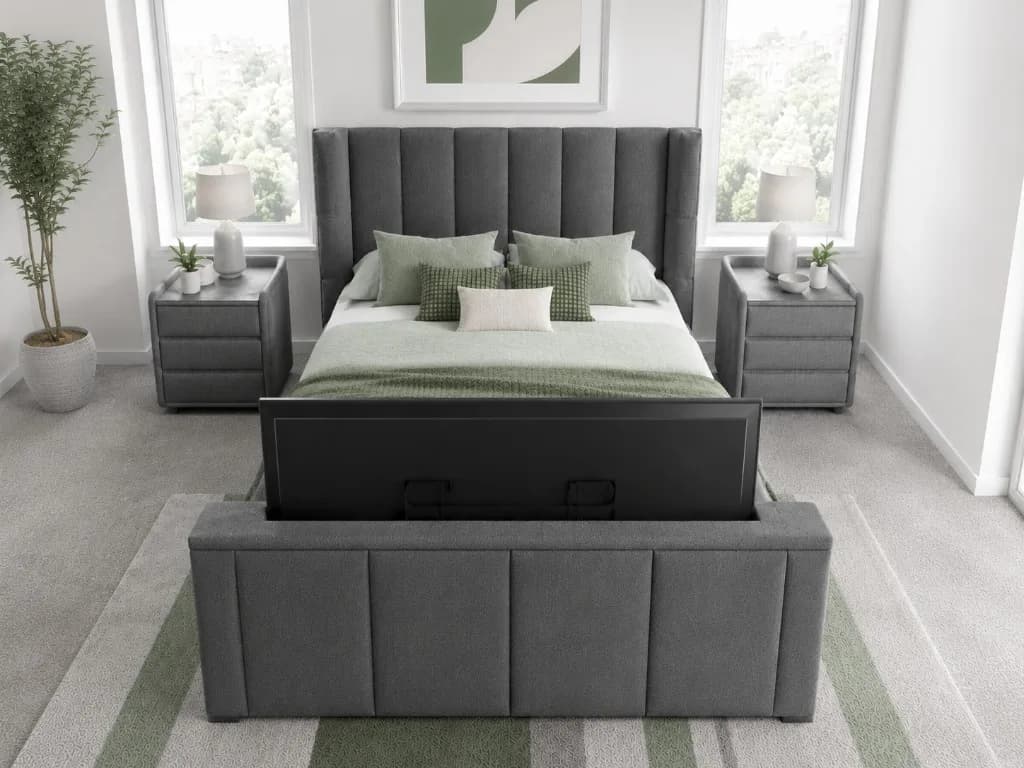
TV Beds with Storage
Selected models combine a concealed television with optional ottoman storage.
Shop TV Beds with Storage
Frequently asked questions
A storage bed combines a sleeping surface with built-in compartments — usually under the mattress (ottoman), in sliding drawers (divan) or occasionally within the headboard. The storage type you choose should match what you want to keep, how often you need access and the layout of your bedroom.
Ottoman storage beds usually offer the largest single compartment because the entire mattress footprint can be accessed from above. Drawer divans divide storage into smaller sections, which may reduce total volume but improve everyday access. Actual capacity depends on bed size, internal depth and construction — check each product page rather than assuming all models are equal.
Neither is universally better. Ottoman beds suit bulky, occasional items; drawer beds suit things you reach for daily. The better choice depends on your belongings, room layout and how much clearance you have for lifting or sliding drawers.
Ottoman beds can work well when floor space is limited because storage sits under the mattress rather than in extra furniture. Drawer beds may suit narrow rooms if one side stays clear for drawers to open. Use a room planner to confirm walkways, wardrobe doors and the bedroom door before ordering.
Drawer beds need enough free floor space for each drawer to extend fully on its runners, plus room to stand and reach inside. The exact distance varies by drawer depth and bed size — measure your room layout rather than relying on a single universal figure.
End-lift models suit rooms where the foot has clearance but sides are tighter. Side-lift models can work when the foot is blocked by a wall or furniture. Choose based on your layout and confirm which opening directions are available on the specific bed you want.
Capacity varies by bed size, internal depth and how the frame is built. Hinges, struts, runners and internal framing all reduce usable space compared with the outer dimensions. Treat calculator results and rough volume estimates as planning guides only — confirm dimensions on individual product pages where available.
Often yes, particularly on larger ottoman sizes, provided the internal height and width are sufficient and the cases are not overfilled. Soft-sided luggage may pack more easily than rigid cases. Measure your cases against the internal dimensions listed on the product page if space is tight.
Avoid damp textiles, uncovered food, liquids, heat-sensitive items, flammable products and anything with a strong odour that could linger in a closed compartment. Do not store items that could damage the mechanism or exceed any weight guidance stated for your specific bed.
Any enclosed storage can trap moisture if items are put away damp or the room lacks ventilation. Store dry bedding, leave compartments open briefly after accessing them when practical, and avoid overfilling the space so air can circulate.
You do not usually need a dedicated storage-bed mattress, but compatibility still matters. The mattress must match the UK size of the bed frame and suit the base type — sprung slats or a solid platform. On ottoman beds, weight and depth can also affect lifting effort. Check both the bed and mattress product pages before ordering.
Complexity varies by model. Gas-lift ottoman mechanisms usually arrive partly assembled, but the base still needs careful alignment and fixing. Drawer divans require runner alignment. Many customers choose professional assembly. Follow the supplied instructions and do not force moving parts if they do not align.
Storage beds are widely used in children's rooms when assembled correctly and used as intended. Supervise young children around open ottoman platforms and moving drawers. Do not let children play on or under an open lift mechanism. Check the manufacturer's guidance for your specific model.
They can be worthwhile when bedroom storage is limited and a single piece of furniture can replace a separate chest or blanket box. Value depends on how well the storage type matches your routine, whether the bed fits your room with safe clearance, and whether the quality of the frame justifies the purchase for your budget.
Plan your room, then choose your storage bed
The right storage bed should solve your storage problem without compromising walkways or clearance. Start with room measurements, compare UK sizes in our UK Bed Size Guide, then explore beds with storage on the category pages.